


Latest News
June 23, 2026 | Text: Markus Selinger | Antivirus for Windows
The best security solutions for Windows 11
Cyberattackers work around the clock to constantly develop new malicious software. The pace is even faster now with the advent of AI-driven systems. But the vendors of security solutions never rest either. They continually improve their protection systems, and leverage the power of AI, as well. Our latest round of testing under Windows 11 shows how reliable 14 of these security packages are at detecting and defending against malware. Quite a few of the security packages are very reliable; however, there are a few that fall short of their promise.
The best protection for Windows 11 computers –
14 security packages detect and defend against trojans, viruses, and more in the test lab
Users are often lulled into a false sense of security, assuming that their personal computer doesn’t contain anything of interest to cyberattackers. But if you’ve been following the news lately, you may have infinite reasons to worry. International agencies such as Europol and the FBI have taken down one botnet after the next in the last 6 months. The most recent case involved a botnet comprising 17 million infected devices, which was neutralized by the National Cyber Security Centre (NCSC-NL) and Dutch national police. And before this case, there had been reports of botnets involving hundreds of thousands of devices. The majority of these “slave” devices in the botnet working in concert are just regular computers running Windows. Which is why it is all the more important to have good security software for Windows 11. It’s the only way that you’ll know that your personal computer isn’t serving a second “master” on a botnet.
In the March/April 2026 test, the experts from the AV-TEST lab evaluated security packages in terms of protection, performance and usability. The test directly exposed the 14 candidates to more than 12,000 malware samples, examined their performance levels and checked their ability to deal with false alarms.
Each package could earn up to 6 points in each of the three test categories. Products scoring 17.5 points or higher receive a TOP PRODUCT label, in addition to their certification as a security solution.
In this test, the line-up of protection packages for consumer users included the following vendors: Avast, AVG, Avira, Bitdefender, EnigmaSoft, ESET, F-Secure, K7 Computing, Kaspersky, Malwarebytes, McAfee, Microsoft, Norton and TotalAV.
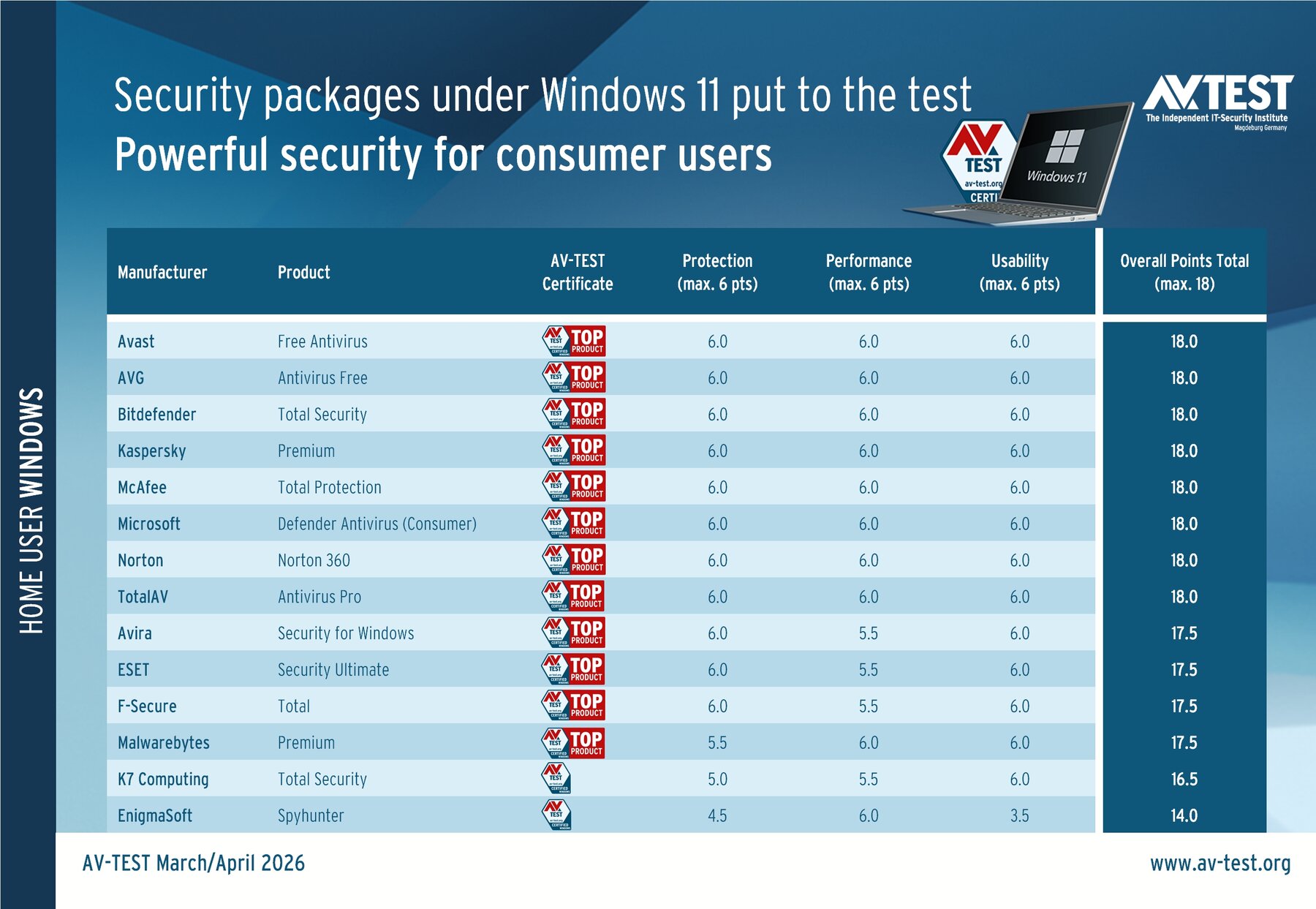
14 security packages under Windows 11 put to the test
The end result of the March/April 2026 test for computers running Windows 11 is impressive: 12 of the 14 security packages examined in the test achieved 17.5 or even the maximum total of 18 points

Will the malware under Windows 11 actually be flagged?
More than 12,000 samples of malware bombarded the Windows systems – 8 security solutions detected them all


Defense against 12,000 samples of zero-day malware as well as other malicious software
The test setup is relatively straightforward and easy to understand. The performance of each security solution is evaluated in two parts. The first part is the real-world test, which examines how well the products detect and fend off brand-new malware 500 times. The second part uses a reference set of recently detected malware, and the packages need to detect, block and eradicate the malware 24,000 times.
The lab performs these tests over the course of 2 months, once a month. For this reason, there are two detection values listed (as percentages) in the detection table.
8 products were able to detect all attackers without fail. The table depicts these products with a value of 100%: Avast, AVG, Bitdefender, ESET, F-Secure, McAfee, Norton and TotalAV.
The packages from Kaspersky and Microsoft made only one minor error in one month with the reference set, earning them a rating of 99.9 percent – with an otherwise exemplary detection rate. The product from Avira made the mistake in the real-world test in one month, garnering it a rating of 99.7 percent. It otherwise detected all other instances of malicious software.
All 11 of these security packages earned the full 6 points for their level of protection offered.
However, the solutions from K7 Computing, Malwarebytes and EnigmaSoft ran into several issues with detecting the malware. They ended up only scoring individual ratings of 91.7 and 96.2 percent for parts of testing. This led to point deductions for all of them: Malwarebytes scored 5.5 points and K7 Computing 5 points, trailed by EnigmaSoft with only 4.5 points.
When the systems are pushed to their limits
Many users have one big concern when it comes to the test: will the security software slow down my Windows computer? The answer to this pertinent question is found in the performance score. The testers use a Windows system without a security solution for this part of the test – one high-end computer and one standard home computer. They surf the internet opening 500 different websites, downloading files and installing apps, which they then also launch on the test system. What’s more, they copy many files to the computer’s hard drive and over a network. The time required for each of these processes is logged and used in later testing as reference values. Then the lab experts install each protection software on the computers and launch it. Each of the processes are repeated and the system’s performance is measured.
10 of the 14 packages passed the tests with flying colors. The security suites from Avast, AVG, Bitdefender, Kaspersky, McAfee, Microsoft, Norton, TotalAV, Malwarebytes and EnigmaSoft placed the systems under a slight load, but hardly enough to make a difference. For this, they all received the maximum 6 points.
The packages from Avira, ESET, F-Secure and K7 Computing caused minor peaks in the system load; however, they didn’t slow down Windows across the board. For this reason, there was only a tiny deduction for the 4 packages: 5.5 out of 6 points.
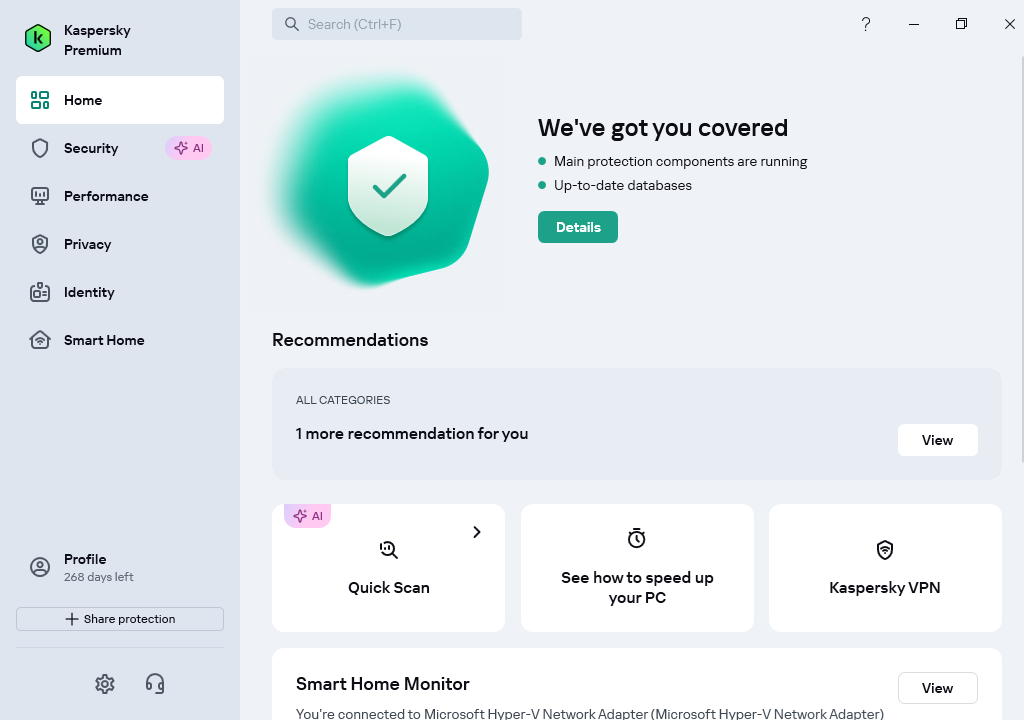
Kaspersky Premium
The protection package from Kaspersky performed flawlessly in the test and scored 6 out of 6 points in each category, earning it a total of 18 points and the TOP PRODUCT label
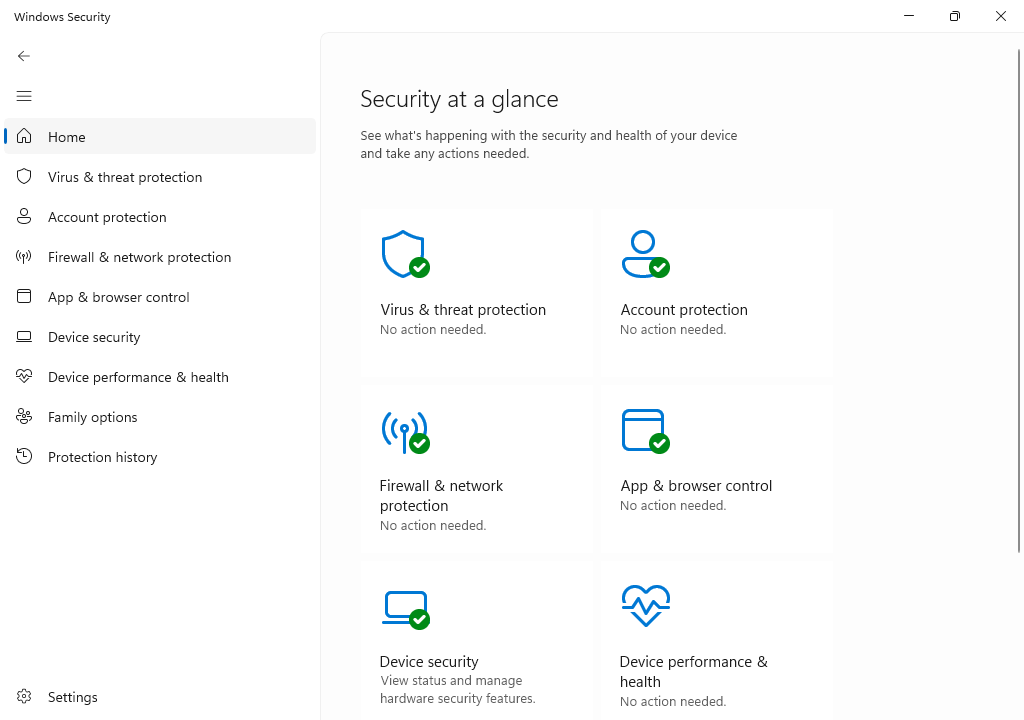
Microsoft Defender Antivirus (Consumer)
Windows’ own protection tool demonstrated its prowess and earned the maximum 18 points – plus the TOP PRODUCT label
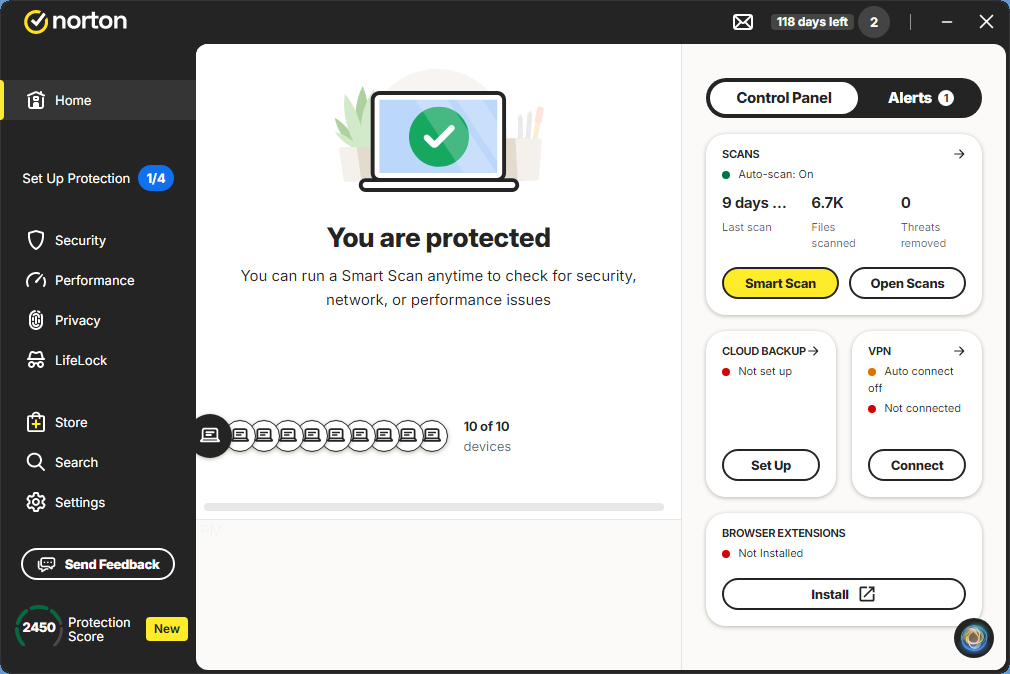
Norton 360
The Norton package completed testing with the maximum score possible (18 points) and earned the TOP PRODUCT label
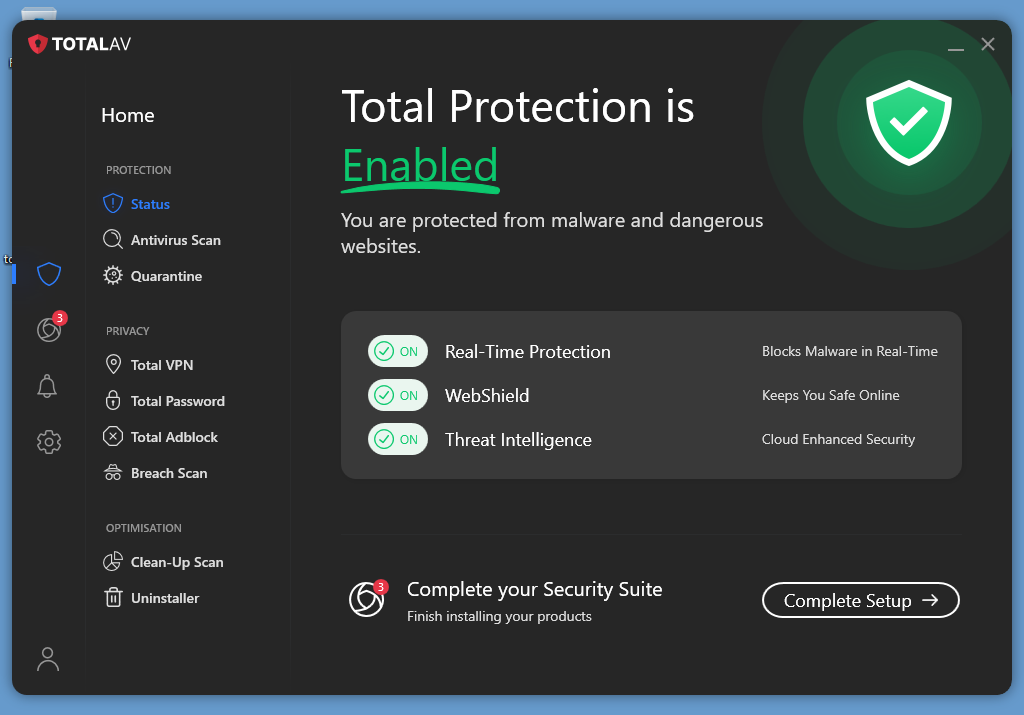
TotalAV Antivirus Pro
This product achieved 6 points in each of the three test categories, garnering the full 18 points and the TOP PRODUCT label
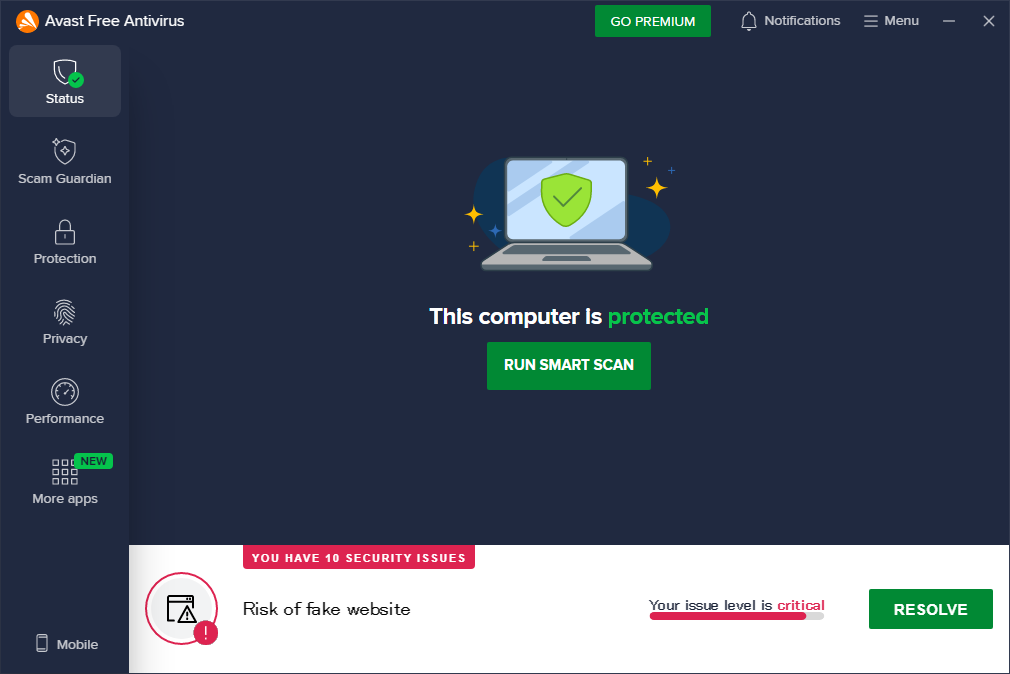
Avast Free Antivirus
Avast’s free protection package for Windows showed a strong performance and earned the full 18 points as well as the TOP PRODUCT label
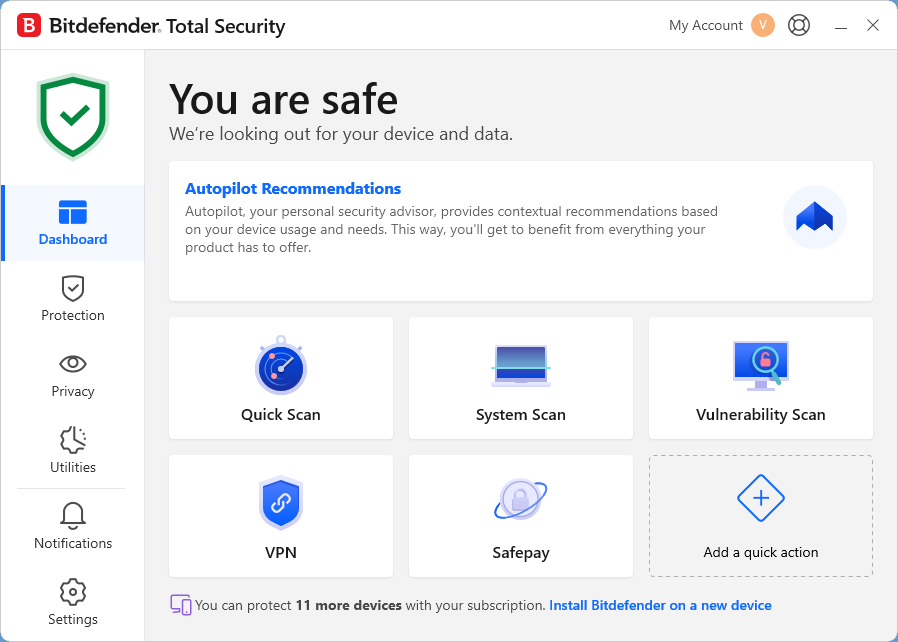
Bitdefender Total Security
Bitfender’s security package showed that it has an excellent handle on things and scored 18 points overall – plus the TOP PRODUCT label
When the protection software is causing annoyance
Unfortunately, it happens time and again: a protection package suddenly flags a new freeware or a well-known tool as malware. This can sometimes occur when an update is installed from a less than reliable source. But what happens when the alarm and all of the uncertainty turns out to be a false alarm? A user’s faith in the Windows system and its protection software starts to falter.
To combat this, the lab experts copied more than 1.5 million harmless applications to each Windows computer in the test and observed how the security suites responded. They also installed and launched more than 100 programs. For a system watchdog, the best outcome would be no response whatsoever, because all of the processes are harmless.
13 of the 14 packages tested were of the same opinion and there were hardly any false positives. Only one or two out of 1.5 million apps were pulled aside here and there – an impressive outcome. As a result, the Windows watchdogs received the full 6 points.
EnigmaSoft was the only solution to be a little more suspicious, making a few more errors. The program overreacted raising the alarm 15 times and blocking two apps, so there were only 3.5 out of 6 points left for the package after all the deductions.
Many excellent security suites for Windows 11
The final test table shows clearly that the vendors of protection software offer reliable and good products. 8 packages garnered the full 18 points, and the other 4 solutions an excellent score of 17.5 points. In addition to the security certificate for these results, the 12 security suites also earned the TOP PRODUCT label.
K7 Computing and EnigmaSoft completed the test with a score of 16.5 and 14 points, respectively.
If you have been following the latest series of test for Windows software, you’ll definitely have also seen the Advanced Threat Protection tests – or ATP tests, for short, which are released on a regular basis. The test experts look at all of the products in 10 live scenarios and evaluate how well they both detect and defend against ransomware and infostealers.
The best Windows antivirus software for home users
Windows 11: April 2026